


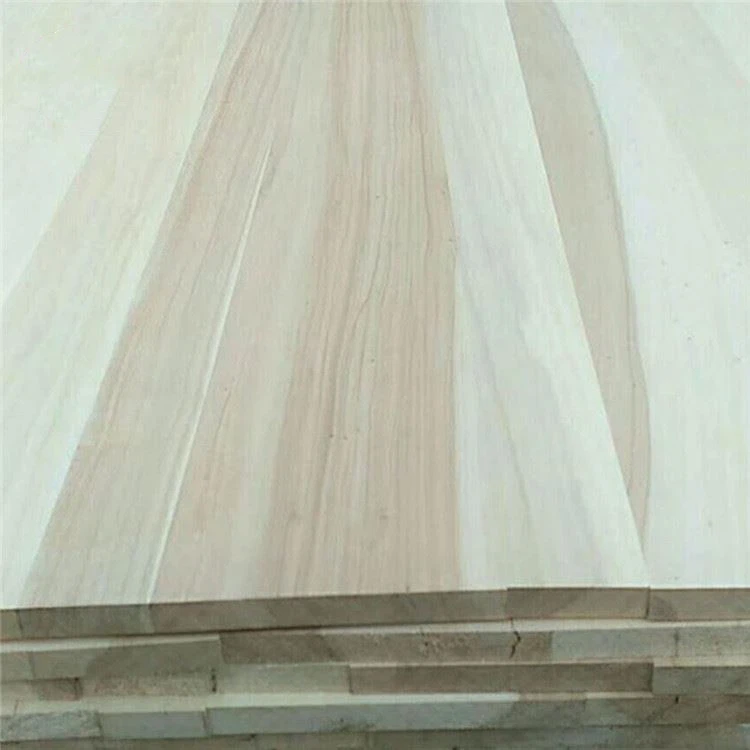
Cao County Hengyu Woods Co., Ltd. is one of the most reliable manufacturers and suppliers of poplar drawer board in China, also supports customized service with low price. If you're going to wholesale cheap poplar drawer board, welcome to get free sample from our factory.
Poplar Drawer Board
Everyone knows that wood furniture is beautiful and generous, but wood cracking is also a problem that cannot be ignored. Below, Our factory will introduce several forms of wood cracking.
1. Surface cracking: refers to surface cracks. Surface cracking refers to cracks on the surface of the original wood body or finished product. Cracks are usually confined to the chord surface and develop along the radial direction. When wood dries, moisture is first evaporated from the surface. When the moisture content of the surface layer drops below the fiber saturation point, the surface wood begins to shrink, but the moisture content of the adjacent inner wood is still above the fiber saturation point and does not shrink. The shrinkage of the surface wood is limited by the inner wood and cannot shrink freely, so internal stress is generated in the wood: the surface wood is stretched, and the inner wood is compressed. The more severe the drying conditions, the greater the difference between the moisture content of the inner and outer layers of wood, and the greater the internal stress produced. If the tensile stress of the surface layer exceeds the tensile strength of the horizontal grain of the wood, the wood structure will be torn. Since the tensile strength of the tissue along the wood ray is lower than the strength of the adjacent wood fibers, the cracks first occur along the wood ray.
2. Internal cracks: internal cracks. Internal cracks are also often called honeycomb cracks. Internal cracks occur in the late drying period, sometimes in the storage period of dry materials. It is usually not easy to find from the outside of the wood, but when it is serious, it can be judged by the depression of the wood surface. Internal cracks are caused by the tensile stress of the inner layer of the wood.
3. End cracks: end cracks. End cracks are either limited to the end face of the wood, or extend to one or both sides of the end. The latter is usually called splitting. The main reason is that the water conductivity of the wood along the grain direction is much greater than that of the horizontal grain direction. When the wood is dry, the water evaporates from the end surface much faster than from the side surface. The moisture content of the end is lower than the middle, and the shrinkage of the end is limited by the middle wood, so tensile (extension) stress is generated at the end. When the tensile stress exceeds the transverse tensile strength of the wood, the end face cracks.
Fourth, ring crack: This kind of crack develops along the direction of the growth ring and often extends to several adjacent growth rings. Wheel cracks usually occur in the early stage of drying, appear on the end of the wood, and the cracks deepen and lengthen as the drying progresses. Sometimes it occurs internally, but it occurs in the later stage of drying and is caused by severe internal tensile stress.
Hot Tags: poplar drawer board, manufacturers, customized, wholesale, cheap, low price, free sample, Decoration Wood Board, Solid Wood Poplar Lumber, No Scar Knot Poplar Panel, White Poplar Lumber, Treated White Poplar Board, Poplar Drawer Board


