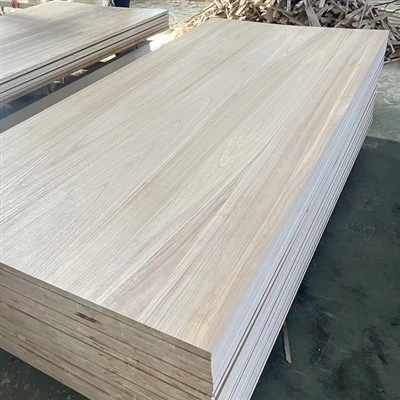


Wood Panel Types Differences: Paulownia, Poplar, Taekwondo Breaking Board & Wall Panel
Meta Description: Many overseas buyers confuse paulownia board, poplar board, taekwondo breaking board and decorative wall panels. We share real factory differences on wood texture, hardness, usage and export quality standards to help you pick the right timber board.
Keywords: paulownia wood board, poplar wood panel, taekwondo breaking board, decorative wall panel, wood panel difference
Most foreign clients often mix up different softwood panels, especially paulownia and poplar wood. These two woods look similar in color, but their hardness, weight and applicable scenarios are totally different. Meanwhile, taekwondo breaking boards and interior wall panels also have strict material selection rules in export orders. Choosing the wrong board will cause product failure, deformation or customer returns.
1. Paulownia Wood Board (Lightweight & Stable)
Paulownia board is one of the lightest commercial wood panels on the market. After high-temperature kiln drying, it hardly warps, cracks or deforms in different humidity environments. The texture is straight and uniform, with no obvious rough grain. Its biggest advantage is low density, good sound insulation and heat insulation performance, and it will not produce obvious shrinkage after long-term use.
In actual export business, paulownia wood is rarely used for load-bearing structures. It is mainly made into craft boards, musical instrument panels, gift box liners, furniture back panels and indoor partition boards. Another popular application is martial arts breaking boards, because paulownia wood breaks evenly with clean fracture surface without sharp burrs, which is safe for training and performance.
Export quality paulownia boards require no dead knots, no wormholes, no mildew spots. The drying moisture content is strictly controlled between 6%-8% to ensure stable long-distance sea transportation.
2. Poplar Wood Board (Harder & Better Nail Holding)
Many buyers cannot tell poplar from paulownia at first glance. Simply put, poplar board is heavier and harder than paulownia. It has stronger nail holding force and better structural stability after processing. The wood grain is slightly messy and textured, which is more suitable for surface veneer and painting treatment.
Poplar wood is the most cost-effective general-purpose board. It is widely used for furniture core boards, cabinet boards, door panels, packaging boards and construction auxiliary materials. Unlike soft paulownia wood, poplar can bear certain weight and is not easy to dent after being stressed.
For export orders, poplar panels are mostly used for formaldehyde-controlled environmental boards. Factories usually sort poplar materials by grades, removing blue-stained and rotten wood to ensure flat board surface and uniform thickness.
3. Taekwondo Breaking Board (Professional Martial Arts Wood Panel)
Almost all standard taekwondo breaking boards in the global market adopt high-quality paulownia wood, not poplar or pine. The core requirement of martial arts boards is fixed and easy-to-break toughness: it will not break under slight pressure, but can break completely with a standard kick or punch, with neat fracture and no splashing debris.
Regular taekwondo boards have fixed thickness specifications for kids, teenagers and adults. The surface is smooth and polished without burrs, and can be printed with custom logos and patterns. Unqualified boards either cannot be broken easily, or break randomly with sharp wood thorns, which will cause training injury risks. Therefore, formal martial arts equipment suppliers have very strict material screening and thickness calibration standards.
4. Decorative Wall Panel (Stable & Beautiful Decoration Grade Board)
Interior decorative wall panels have higher requirements for flatness and appearance. Most wall panels use optimized poplar base boards or composite spliced boards, with stable structure, no deformation after long-term wall mounting, and good surface flatness for veneer, paint and film covering.
Wall panels focus on decoration performance rather than hardness. The core export standards are no color difference, no deformation, uniform splicing gap, and environmental protection glue compliance. Such boards are widely used in home decoration, hotel engineering, office wall cladding and indoor ceiling decoration.
Quick Buying Summary for Export Clients
Choose paulownia wood if you need lightweight, non-deformable, craft, gift box or taekwondo breaking boards.
Choose poplar wood if you need cost-effective furniture, cabinet, packaging and structural base boards.
Choosestandard paulownia martial arts board for taekwondo training and performance equipment.
Choose graded poplar composite board for indoor decorative wall panels to ensure flat and beautiful installation effect.
We have been engaged in wood panel processing and export for many years. All products are strictly graded, with stable moisture content and export inspection standards. We support custom size, logo printing and different grade packaging for global clients.