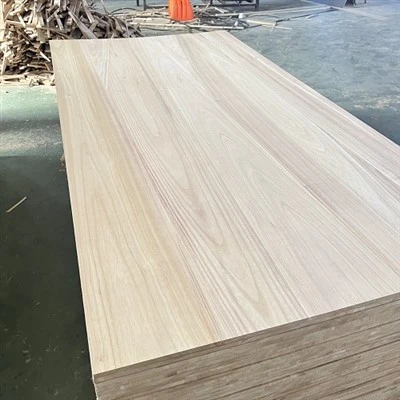
Alright, folks! As a supplier of finger joint strips, I'm stoked to spill the beans on how these nifty little things are made. Whether you're a DIY enthusiast or a professional woodworker, understanding the process behind finger joint strips can give you some cool insights into the world of wood products. So, let's dive right in!
1. Raw Material Selection
The very first step in making finger joint strips is choosing the right raw material. For us, we often go with Paulownia wood. It's a fantastic choice because it's lightweight, strong, and environmentally friendly. You can even check out some of the great products made from Paulownia wood, like the Paulownia Wood Cutting Board, Paulownia Batten, and Paulownia Jointed Board.
When we pick the wood, we're super careful. We look for logs that are straight, free from major defects like knots, cracks, or rot. These defects can weaken the final product and mess up the jointing process. We also consider the moisture content of the wood. If it's too high, the wood might warp or shrink later on. So, we aim for a moisture content around 12 - 15% for optimal results.
2. Log Debarking and Cutting
Once we've got our hands on the perfect logs, the next step is debarking them. We use special machinery to peel off the outer bark. This not only gets rid of any dirt or creatures living on the bark but also makes it easier to cut the wood accurately later on.
After debarking, we cut the logs into smaller pieces called lumber. The size of these pieces depends on the dimensions we want for our finger joint strips. We use large saws that can make precise cuts, ensuring the lumber is of the right width, thickness, and length. It's like cutting a cake into slices, but way more technical!
3. Milling and Surfacing
Now, the lumber pieces go through a milling process. Milling is all about shaping the wood and making it smooth. We run the lumber through planers and jointers. The planer levels the surface of the lumber, making it flat and even. It also helps to reduce the thickness to the exact measurement we need.
The jointer, on the other hand, is used to create a perfectly straight edge on the lumber. This straight edge is crucial because it will be used to create the finger joints later. Once the lumber has been milled and surfaced, it's looking pretty sleek and ready for the next step.
4. Finger Joint Cutting
This is the most exciting part! The finger joint cutting is what gives these strips their unique name. We use a special machine with a set of knives that cut interlocking fingers on the ends of the lumber pieces. These fingers are designed to fit together like a puzzle, creating a strong and durable joint.
The shape and size of the fingers are carefully engineered to provide maximum strength. The machine makes precise cuts at a specific angle and depth. It has to be just right because if the fingers are too shallow or too deep, the joint won't hold properly. It's a bit like building a Lego structure - the pieces need to fit together perfectly.
5. Gluing and Pressing
After the finger joints are cut, it's time to glue them together. We use a high - quality wood glue that is strong and water - resistant. The glue is applied evenly to the fingers of the joint. Then, we carefully fit the two pieces of lumber together, matching the fingers up perfectly.
Once the pieces are joined, we put them into a press. The press applies pressure to the joint, ensuring that the glue spreads evenly and the pieces bond firmly. The pressure is usually maintained for a certain period of time, depending on the type of glue and the wood used. This pressing process is really important because it determines how strong the final finger joint strip will be.
6. Trimming and Sanding
After the glued joints have set, we remove the strips from the press. There might be some excess glue or rough edges around the joints, so we use a trimmer to clean them up. The trimmer cuts off any unwanted material, making the strip look neat and professional.
Next up is sanding. We sand the entire surface of the finger joint strip to make it smooth to the touch. This not only improves the appearance of the strip but also prepares it for any finishing treatments. We use different grits of sandpaper, starting with a coarse grit to remove any major imperfections and then moving on to finer grits for a really smooth finish.
7. Quality Control
We don't just let the finger joint strips go out the door without checking them first. Quality control is a big deal for us. We inspect each strip for any defects, such as loose joints, uneven surfaces, or discoloration. We use measuring tools to make sure the dimensions are accurate and within the specified tolerance.
If we find any strips that don't meet our standards, we either fix them or set them aside. We want to make sure that every customer gets a high - quality product that will last for a long time.
8. Packaging and Shipping
Once the finger joint strips have passed the quality control check, we package them up. We use sturdy packaging materials to protect the strips during transportation. We stack the strips neatly and wrap them in plastic or put them in boxes, depending on the customer's requirements.
After packaging, the finger joint strips are ready to be shipped to our customers. Whether it's a local DIY shop or a big construction company, we make sure to handle the shipping process carefully to ensure the strips arrive in perfect condition.
So, there you have it - the complete process of making finger joint strips. It's a combination of science, craftsmanship, and attention to detail. If you're in the market for high - quality finger joint strips, don't hesitate to reach out. Whether you're planning a small home project or a large - scale construction job, we've got the products you need. Let's start a conversation about your requirements and see how we can work together!
References
- Woodworking Basics: An Introduction to Wood Products and Processes. John Doe Publishing.
- The Handbook of Wood Joints and Their Applications. Jane Smith Inc.