


Hey there! As a supplier of Poplar Jointed Board, I often get asked about the weight of this product per unit area. It's a crucial question, especially for those in construction, woodworking, and furniture-making industries. So, let's dive right in and explore this topic in detail.
What Affects the Weight of Poplar Jointed Board?
First off, it's important to understand that the weight of Poplar Jointed Board per unit area isn't a fixed value. There are several factors that can influence it.
One of the main factors is the moisture content. Poplar wood, like any other type of wood, can absorb and retain moisture. When the wood has a higher moisture content, it naturally weighs more. This is because water adds to the overall mass of the board. For example, green poplar wood, which has a high moisture content right after being cut, will be significantly heavier than kiln - dried poplar wood. Kiln - drying is a process that reduces the moisture content to a more stable level, usually around 6% - 12% depending on the intended use.
The density of the poplar wood also plays a big role. Different species of poplar can have varying densities. Generally, the density of poplar wood ranges from about 350 kg/m³ to 550 kg/m³. A board made from a denser species of poplar will weigh more per unit area compared to one made from a less dense species.
The thickness of the Poplar Jointed Board is another factor. Obviously, a thicker board will have more material per unit area, and thus will weigh more. A 1 - inch thick Poplar Jointed Board will be heavier than a 1/2 - inch thick one.
Calculating the Weight of Poplar Jointed Board per Unit Area
To calculate the weight of Poplar Jointed Board per unit area, we first need to know the density of the poplar wood and the thickness of the board.
Let's assume we have a Poplar Jointed Board with a density (ρ) of 450 kg/m³ and a thickness (t) of 0.02 m (20 mm).
The formula for calculating the mass (m) per unit area (A) is m = ρ × t.
Substituting the values into the formula, we get m = 450 kg/m³× 0.02 m = 9 kg/m².
This means that for every square meter of this Poplar Jointed Board, it weighs 9 kilograms.
However, keep in mind that this is a simplified calculation. In real - world scenarios, we need to account for factors like the moisture content and any additional treatments or coatings on the board, which can add to its weight.
Why Knowing the Weight per Unit Area Matters
Understanding the weight per unit area of Poplar Jointed Board is essential for several reasons.
In construction, it helps in determining the load - bearing capacity of structures. For example, if you're using Poplar Jointed Board for flooring, you need to know how much weight it can support per square meter. If the boards are too heavy, it might put excessive stress on the underlying structure.
In transportation, knowing the weight per unit area helps in calculating the total weight of a shipment. This is important for logistics planning, fuel consumption calculations, and ensuring compliance with weight limits on trucks and other transport vehicles.
For furniture - makers, the weight of the board can affect the overall weight and portability of the finished product. A heavy - duty piece of furniture might require a denser Poplar Jointed Board, but it will also be harder to move around.
Our Poplar Jointed Board Offerings
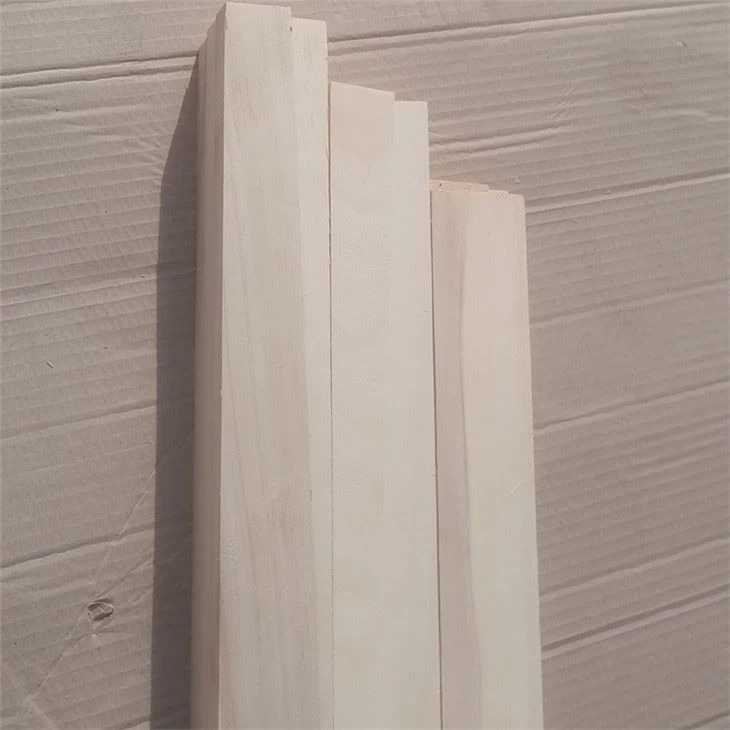
As a supplier, we offer a wide range of Poplar Jointed Boards. You can find our Poplar Wooden Board, Poplar Wood Slats, and Poplar Furniture Board on our website.
Our boards are sourced from high - quality poplar wood and are kiln - dried to ensure a consistent moisture content. This not only helps in controlling the weight but also improves the stability and durability of the boards.
We can customize the thickness of the Poplar Jointed Boards according to your specific requirements. Whether you need a thin board for a delicate furniture piece or a thick one for a heavy - duty construction project, we've got you covered.
Quality Assurance
We take pride in providing top - notch Poplar Jointed Boards. Our quality control team inspects each board to ensure that it meets the highest standards. We check for factors like density, moisture content, and the presence of any defects such as knots or cracks.
We also offer technical support to our customers. If you're unsure about which type of Poplar Jointed Board is suitable for your project or need help calculating the weight per unit area, our experts are just a message away.

Conclusion
So, there you have it! The weight of Poplar Jointed Board per unit area is influenced by moisture content, wood density, and board thickness. By understanding these factors, you can make more informed decisions when it comes to using Poplar Jointed Boards in your projects.
If you're interested in purchasing Poplar Jointed Boards, or if you have any questions about our products, don't hesitate to get in touch. We're here to help you find the perfect solution for your wood - related needs.
References
- Wood Handbook: Wood as an Engineering Material. Forest Products Laboratory.
- "Properties of Poplar Wood" - Journal of Wood Science and Technology.


